
What the UNESCO listing covers
The site is called Lagoons of New Caledonia: Reef Diversity and Associated Ecosystems. It was inscribed in 2008 as a serial site of 6 marine clusters, with coral reefs and connected mangrove and seagrass ecosystems. The inscribed area is 1,574,300 hectares. A buffer zone of 1,287,100 hectares is counted separately and lies outside the inscribed property.
That matters for what you see on a trip. Not every beach, natural pool or stretch of lagoon that boats cross is part of the listed property. UNESCO listing, local marine reserves, swimming zones and excursion spots are different categories, and each has its own rules.
Snorkeling and diving
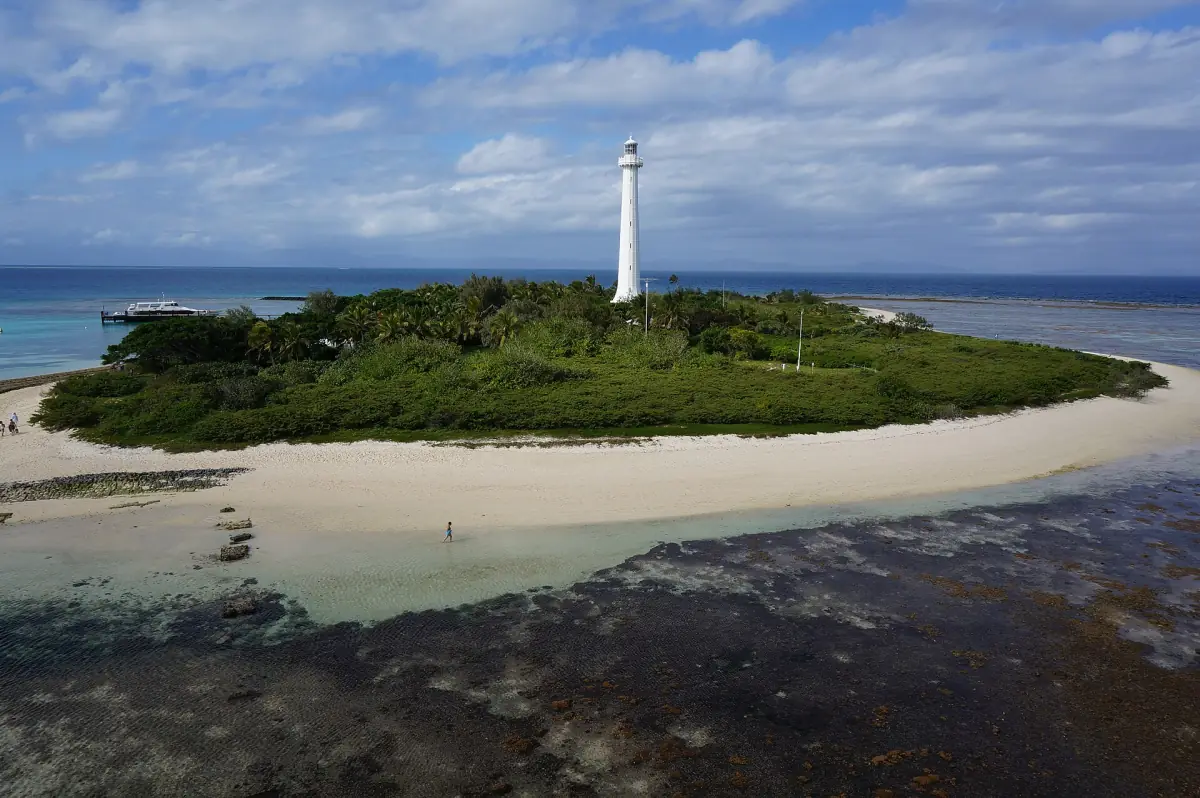
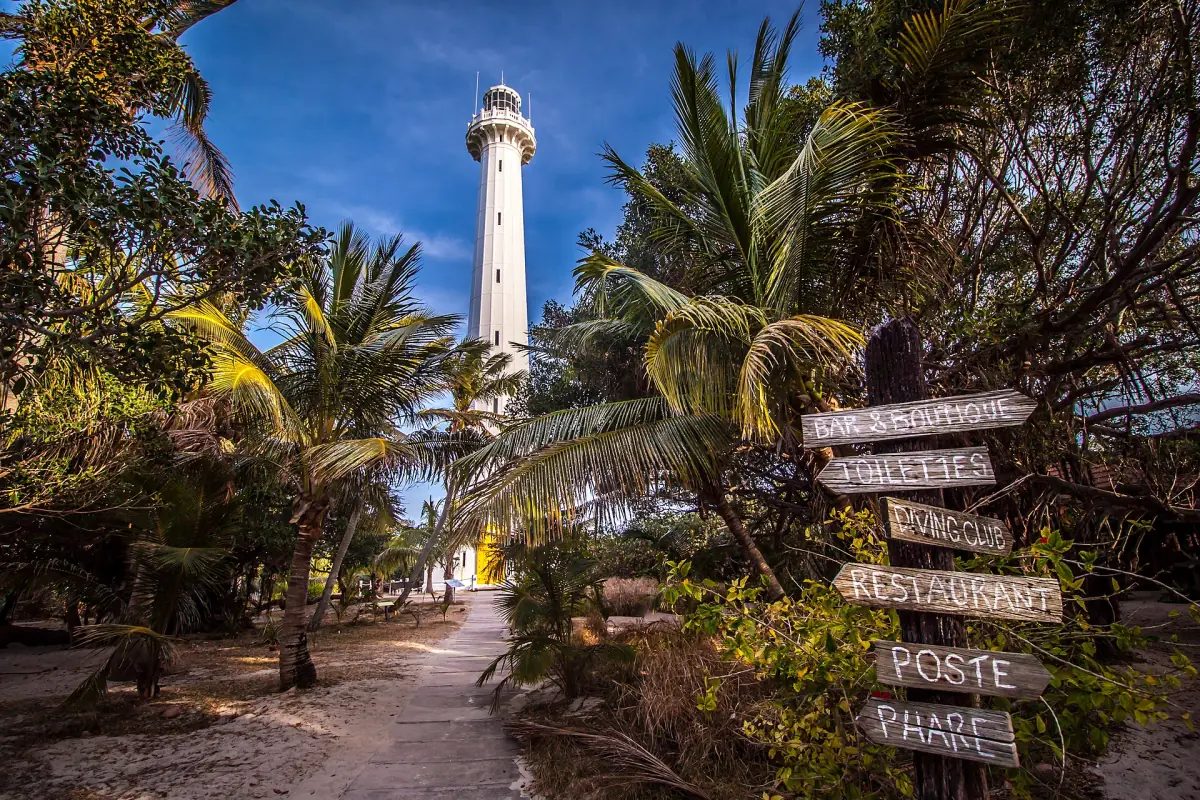
Amédée is described as a destination for both snorkeling and diving. The operator's 2026 price list confirms that snorkeling gear is a rental, so do not expect it to be free. The boat package is covered on our Amédée Island page.
Blue C is listed for introductory dives and snorkeling trips toward Amédée. There is no single price for diving, snorkeling or whale watching across New Caledonia, so check each provider for current prices, ages and availability.
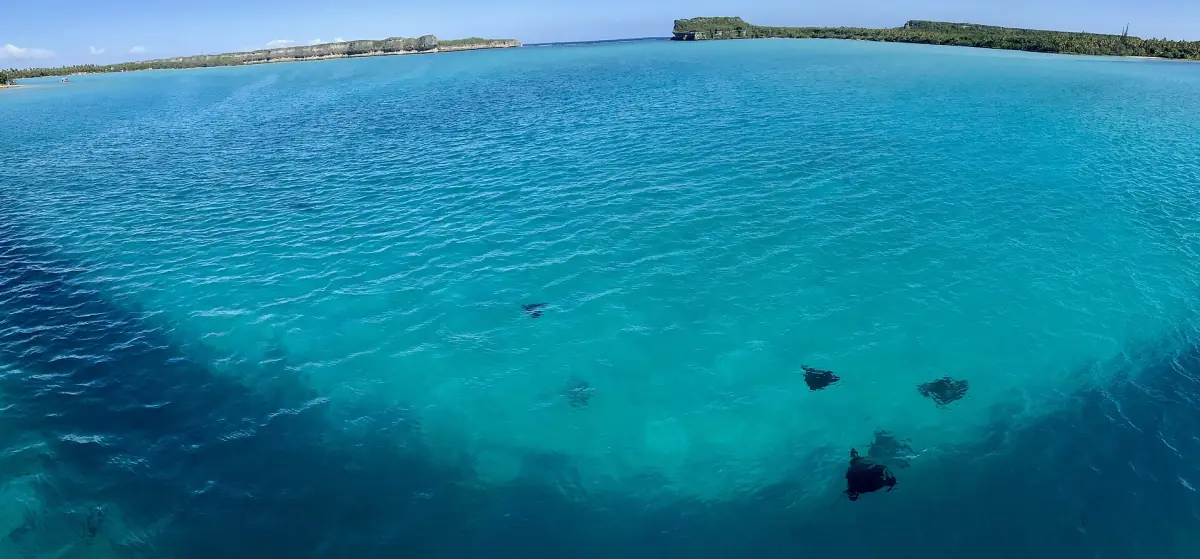
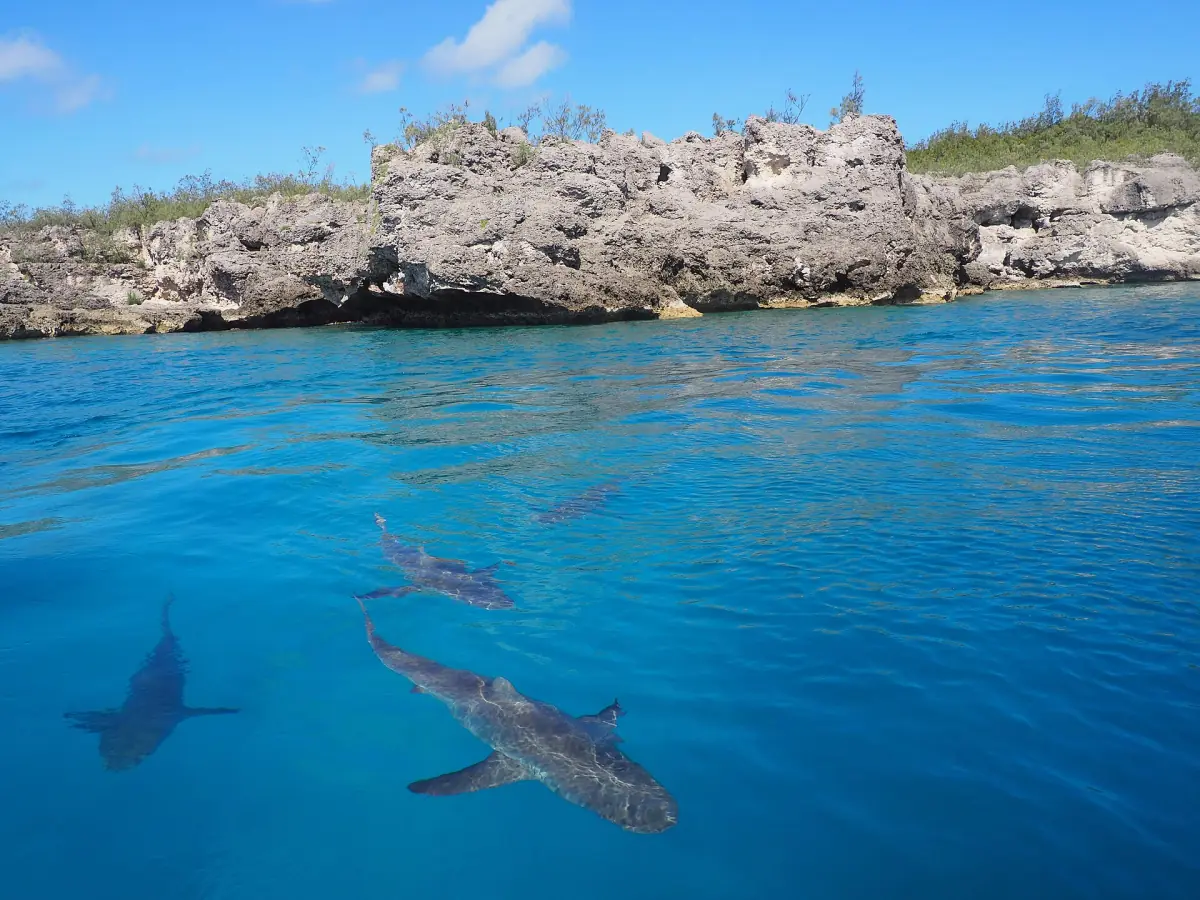
The photo shows rays in the clear water at the Mouli bridge on Ouvéa. Local rules apply on customary land there, for example at Lékiny, where swimming in the bay without a guide is not allowed. See the Loyalty Islands page.
Our picks: on the lagoon
Snorkeling trips by taxi boat or water taxi, and a pontoon day with seafood.
Hand-picked tours, booked through GetYourGuide. Prices are indicative starting prices in euros (as of October 2026). Tap a tour for live availability and the current price in your currency.
Pontoon day with seafood and snorkeling
Bus to the Côte Blanche pier, a taxi boat to the pontoon, seafood and dessert, sun loungers, kayaks, paddle boards and snorkeling gear are included. Entry fees are not covered.
Check availability →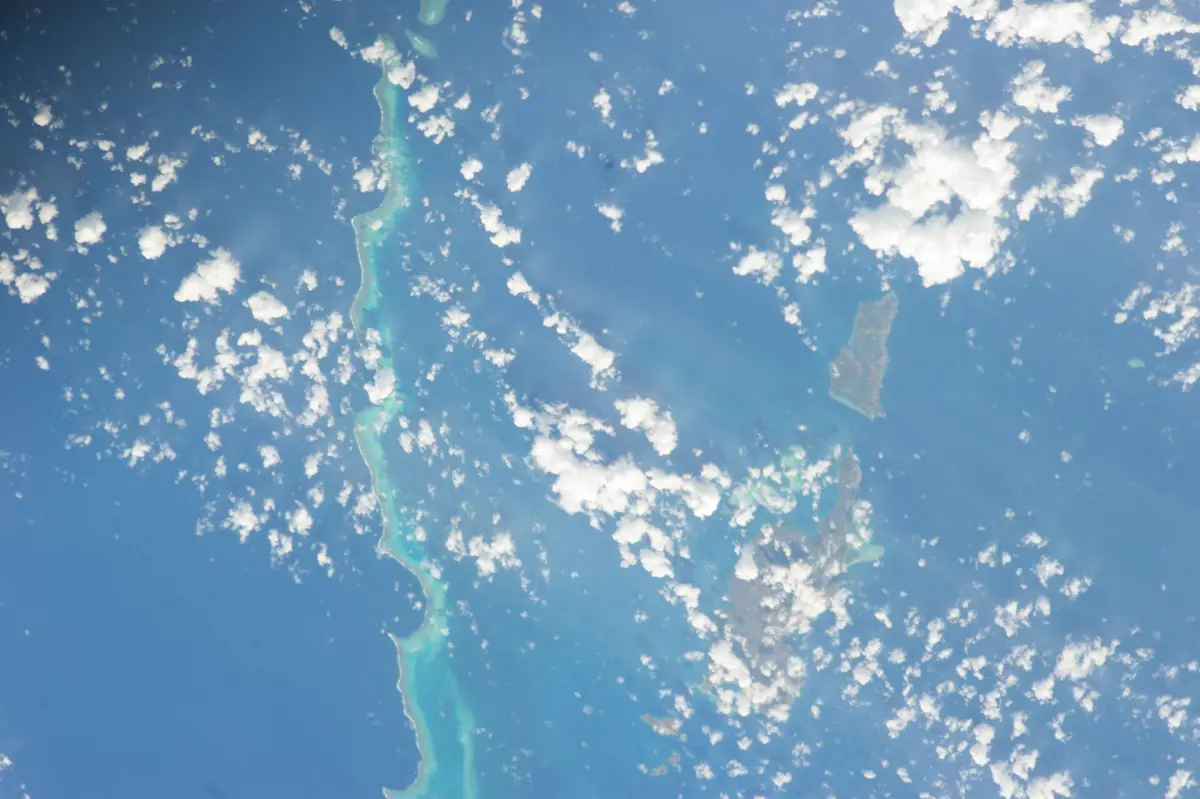
Taxi boat to a private island with snorkeling
Taxi boat, snorkeling gear and a private island area with Wi-Fi and fresh water are included.
Check availability →
Laregnere Island by water taxi with snorkeling
Water taxi, mask, snorkel and pool noodle are included. There is no professional snorkeling guide.
Check availability →Lagoon trips, snorkeling and diving
Boat trips, snorkeling excursions and diving experiences on the lagoon, with live prices and availability.
Reserves, anchoring and fire
The Southern Province publishes a lagoon guide for 2026. It separates public nature reserves with strict rules from other kinds of protected areas. Not every island or reserve has the same rules, so check the status and the signs before you land.
Do not anchor on coral or seagrass. If you plan a fire on a beach, check the current fire danger first.
Whale watching and its rules
The Southern Province describes the passage of humpback whales from June to September. A tourism page for Shabadran gives mid-July to mid-September as an observation window. Sightings are never guaranteed.
| Rule | Southern Province |
|---|---|
| Distance | No closer than 100 m |
| Behavior | No chasing, no approach from front or behind, do not block the whale's path |
| Calves | Do not approach calves or groups with a calf |
| Boats | At most 4 boats, on the same side |
| Time | At most 1 hour continuously per boat and whale group, 3 hours in total |
| Fine | 90,000 XPF, doubled in a marine reserve |
These rules are those of the Southern Province, so details can differ elsewhere. If you prefer to watch from land, Cap N'Dua has a viewing area. Choose an operator that follows these limits.
Swimming near Nouméa
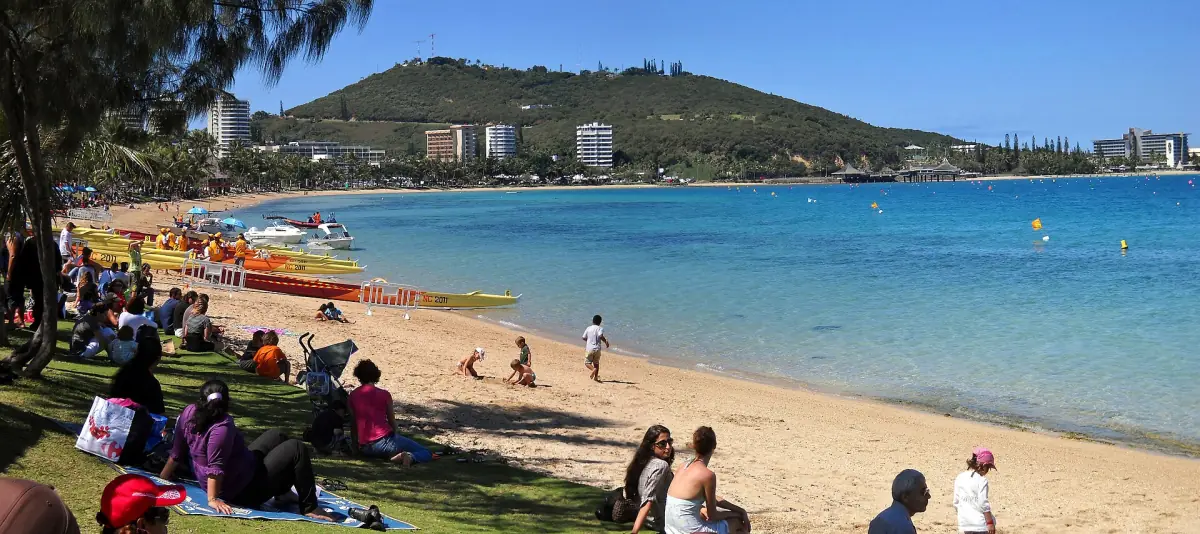
Do not equate every beach with a protected swimming zone. The city describes two protected, supervised zones with shark barriers: Baie des Citrons and the Château Royal and Méridien area. The rest of Anse Vata and other beaches and islets are not automatically covered by that protection, and the city advises using protected and supervised areas.
Supervision hours at Baie des Citrons are 08:45–17:00 from October to the end of April and 08:45–16:00 from May to the end of September. Temporary swimming and water sports bans outside the protected zones applied after incidents in February 2026 (23 February to 4 March) and in April 2026 (15 to 26 April), and they have ended. Check the city's current notices before you swim. More is on the Nouméa page.
When to go and the lagoon on land
Nouméa's climate figures for 1991 to 2020 show October as the driest month, with an average of 36.3 mm of rain, and September to November as comparatively dry months for planning. That is not a promise of good weather. February has the highest average daily maximum, 29.9 °C. The local cyclone season runs from November to April, and an Australian travel advisory uses November to May, so treat both as the period when sea conditions can turn. Details are on our weather page.
If the sea is rough, the Aquarium des Lagons at Anse Vata gives a look at the lagoon from the shore. Adults pay 1,600 XPF and ages 3 to 17 pay 800 XPF, with children under 3 free, as shown in October 2026.
Plan the rest of your trip
Pages that connect with the lagoon.
New Caledonia lagoon: frequently asked questions
Is the whole lagoon a World Heritage site?
No. The listing is a serial site of 6 marine clusters, inscribed in 2008. A buffer zone is counted separately, and not every beach or boat route lies inside the listed property.
When can I see humpback whales?
The Southern Province describes their passage from June to September. Sightings are never guaranteed.
How close may a boat get to a whale?
No closer than 100 m under the Southern Province rules. Calves and groups with a calf must not be approached, and chasing is not allowed.
Can I rent snorkeling gear?
Yes. The boat operator to Amédée lists snorkeling gear as a rental. Check its price list for 2026.
Is it safe to swim anywhere in Nouméa?
No. Use the protected, supervised zones at Baie des Citrons and the Château Royal and Méridien area, and check the city's notices for temporary bans.
What should I avoid doing in the lagoon?
Do not anchor on coral or seagrass, and respect the rules of any nature reserve you enter. At Amédée, fishing, touching turtles, disturbing small marine animals and collecting shells are not allowed.